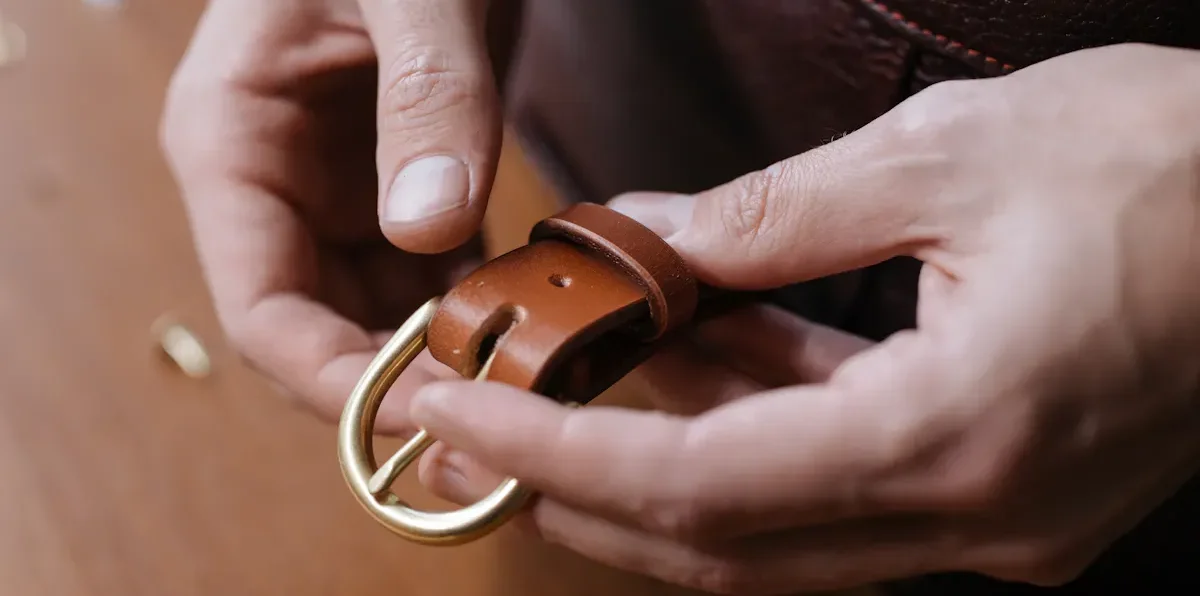
Have you ever wondered why some belts last for years, while others crack and peel within months? Choosing a high-quality leather belt makes a real difference in your daily comfort and style. A handmade leather belt, crafted with care, offers much more than just a way to hold up your pants. With proper care, a handcrafted leather belt can last up to 15 years, far outlasting mass-produced options.
| Type of Belt | Lifespan |
|---|---|
| High-Quality Handmade | 10–15 years |
| Mass-Produced | 2–3 years |
Spotting a high-quality leather belt helps you avoid wasting money on belts that wear out quickly.
Key Takeaways
- Find full-grain leather. This leather is very strong. It gets a nice look as it ages.
- Look at the stitching and edges. Stitches should be neat and even. Edges should feel smooth. This shows good work.
- Check how thick and bendy the belt is. A good belt is 4–5 mm thick. It should bend but not crack.
- Learn about who made the belt. Good makers tell you how they make belts. They use good materials.
- Be careful of warning signs. Do not buy belts that smell like chemicals. Do not buy belts that look too shiny and perfect.
Full-Grain Leather and Material Quality
Identifying Full-Grain Leather
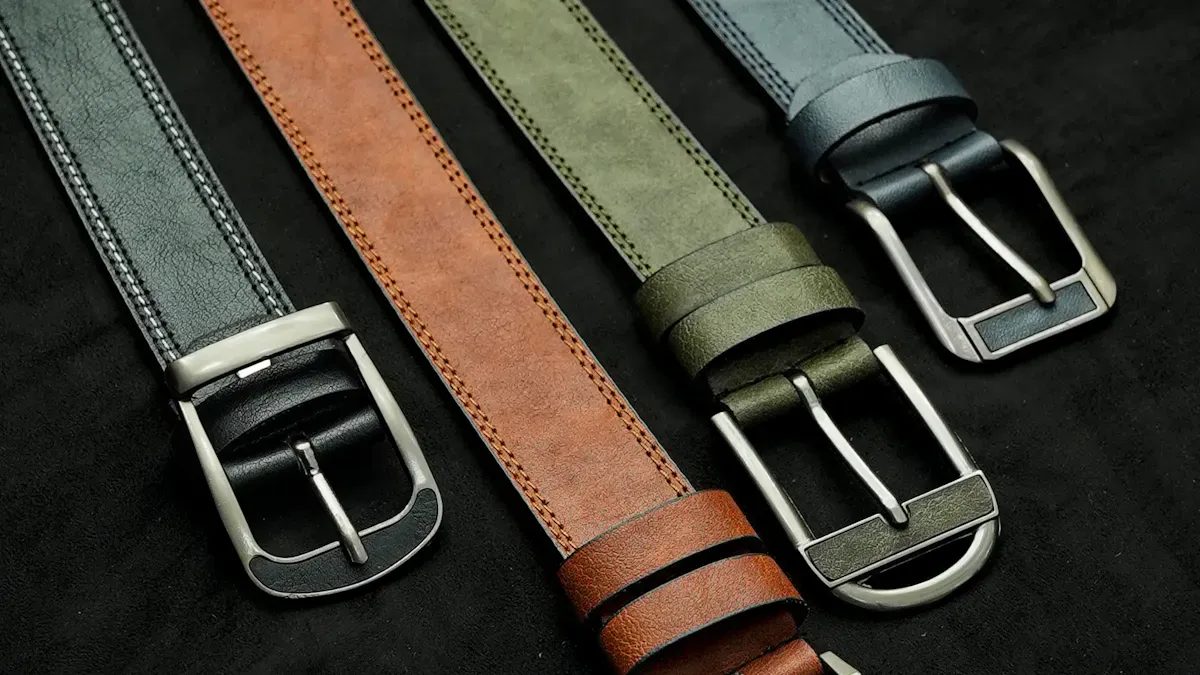
When you want a belt that lasts, you should look for full-grain leather. This type of leather comes from the outermost layer of the hide. It keeps the natural grain, which makes it strong and durable. Many people choose full-grain leather belts because they can handle daily wear and still look great over time. You will notice that full-grain leather develops a rich patina as you use it, adding character and beauty.
Here is a table to help you compare full-grain leather with other types of leather:
| Characteristic | Full-Grain Leather | Other Types of Leather |
|---|---|---|
| Durability | High | Varies |
| Natural Imperfections | Present | Often removed |
| Thickness | Thicker | Thinner |
| Breathability | High | Lower |
| Patina Development | Yes | Limited or none |
You can spot genuine full-grain leather by using your senses:
- Feel: The surface feels firm but not stiff. It has a natural texture.
- Smell: Real full-grain leather has an earthy aroma from the tanning process. Fake leather often smells like chemicals.
- Appearance: Each piece looks unique. You will see irregular grain patterns and small marks that show the leather’s history.
If you want a handmade leather belt that stands out, always check for these signs. Full-grain leather belts offer the best mix of strength and style.
Natural Grain and Imperfections
Full-grain leather belts show the real story of the animal’s life. You might see small scars, healed scratches, or even tiny freckles on the surface. These marks are not flaws. They prove that the leather is genuine and unsanded. When you choose a handmade leather belt, you get a product that is one of a kind.
Look for these natural features:
- Scars from ranch life or fencing
- Wrinkles and stretch marks from movement
- Freckles and pigment spots
- Neck wrinkles and vein patterns
- Grain variation across the belt
- Shading differences from natural dyes
- Insect bites or ranch brands
These details make full-grain leather belts special. They show that the belt is made from the best part of the hide. You can trust that a handmade belt with these marks will last for years.
Tip: Natural imperfections are a sign of quality, not a defect. They mean your belt is real and built to last.
Texture, Thickness, and Flexibility
When you hold a full-grain leather belt, you should check its thickness and flexibility. High-quality full-grain leather belts usually measure about 4–5 mm thick. This thickness gives the belt strength without making it too stiff. If the belt feels too thin, it might fold or bow after a short time. If it feels too thick, it could be uncomfortable to wear.
You can test the flexibility by gently bending the belt. A good full-grain leather belt will bend without cracking or creasing. The surface should feel smooth but not slippery. The belt should return to its shape after you bend it.
- Standard thickness: 4–5 mm
- Too thin: May fold or lose shape
- Too thick: May feel stiff and hard to wear
When you choose a handmade leather belt, always check the texture, thickness, and flexibility. These features show that the maker used high-quality full-grain leather and paid attention to every detail.
Craftsmanship in Handmade Leather Belts
Stitching and Edge Finishing
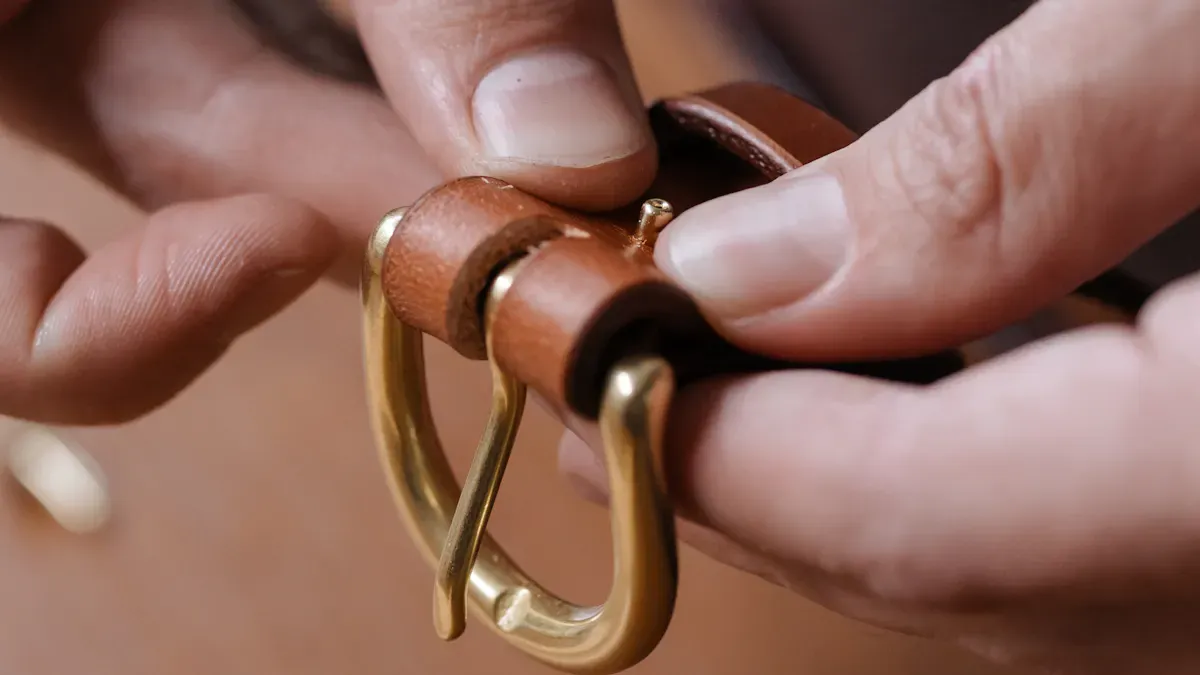
You can tell if a handmade leather belt is well made by looking at the stitching and edges. Good makers use strong thread and make neat stitches. The stitches go in a straight line and are spaced evenly. Each stitch helps keep the leather together so it does not fall apart. You should look at both sides of the belt. If you see loose threads or messy lines, the belt might not last long.
Edge finishing is also important. Makers use special tools to make the edges smooth and sealed. Sometimes they burnish or paint the edges to protect the leather. Finished edges feel smooth and look tidy. If the edges are rough or cut raw, they can fray and lose their shape. Fraying edges mean the belt was not made well and will not last as long.
Tip: Always check the edges. Smooth finished edges show the maker worked hard to make a strong leather belt.
Some signs of poor work in stitching and edge finishing are:
- Edges that look rough or fuzzy
- Leather that feels sharp or unfinished
- Stitches that are uneven or messy
- Threads that stick out
- No edge finishing done
When you pick unique handmade leather belts, you get neat stitching and smooth edges. These details help the belt last longer and look nicer.
Hardware Quality and Attachment
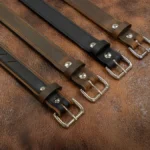
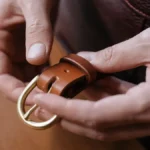
The hardware on handmade leather belts is just as important as the leather. Buckles and other parts should feel heavy and solid. Heavy hardware usually means better material and stronger build. Solid metal parts like brass or stainless steel do not bend or break easily. They help the belt last for many years.
A good buckle keeps the leather safe from damage. It spreads out the pressure so the leather does not crack. Makers use strong rivets or extra stitching to attach the hardware. This keeps the buckle in place and stops it from coming off.
Good handmade leather belts use thick, single-piece leather straps. Strong hardware, like solid brass or stainless steel, makes the belt stronger. Extra care in attaching the buckle and finishing the edges helps the belt last even longer.
You can look for these things:
- Thick leather straps made from one piece
- Strong hardware like solid brass or stainless steel
- Buckle attached with extra care
- Neat finishing and smooth edges
When you choose a handmade leather belt with these features, you get a belt that will last a long time.
Comfort and Durability
Handmade leather belts are more comfortable and last longer than most store-bought belts. Makers use full grain leather, which has strong natural fibers. This leather does not stretch, crack, or tear easily. Using one piece of leather gives the belt extra strength. The belt will not come apart when pulled or if it gets wet.
Vegetable-tanned leather is very comfortable. It gets softer and fits your body as you wear it. You can feel the difference when you wear a handmade belt. The belt moves with you and feels soft on your skin.
Here is a table that shows what makes a belt comfortable and strong:
| Material/Technique | Description |
|---|---|
| Full Grain Leather | Has the strongest natural fibers, does not stretch, crack, or tear easily. |
| Single-Piece Construction | Gives the belt extra strength, so it does not come apart. |
| Vegetable-Tanned Leather | Gets softer over time and fits your body well. |
You should look for these things when buying unique handmade leather belts. They make the belt feel good and last for years. Makers who care about their work make belts that last a long time. You get a leather belt that feels nice and looks great.
Note: Handmade leather belts made with good materials and careful work are more comfortable and last longer than others.
Authenticity and Red Flags
Verifying Handmade Claims
You want to make sure your belt is truly handmade. Start by asking the seller about the process. A real handmade leather belt will show small signs of handwork, like tiny tool marks or slight differences in stitching. You can also check if the maker uses machines for mass production. Handmade belts often have unique features that set them apart from factory-made ones. Look for details like hand-burnished edges or custom stamping. If every belt looks exactly the same, you might not be getting a true handmade product.
Tip: Ask for photos of the belt during different stages of making. Makers who take pride in their work will often share these.
Maker Reputation and Research
You can learn a lot about genuine leather belts by researching the maker. A good reputation means the maker uses quality materials and pays attention to detail. You will find that trusted makers often share information about their process and where they get their leather. Reading reviews helps you see how other buyers feel about the comfort and durability of their belts. You can also check if the maker follows ethical practices. This research helps you spot genuine leather belts and avoid cheap imitations.
- You can assess the quality of materials used.
- You gain insights into the craftsmanship behind handmade leather belts.
- You learn about the maker’s values and ethical standards.
Warning Signs of Low Quality
You should watch for red flags when shopping for genuine leather belts. Some belts look nice but do not last long. Here are signs that a belt may not be genuine or handmade:
- The belt smells like chemicals or plastic instead of having an earthy, outdoor scent.
- The leather looks too perfect, smooth, or shiny. Real leather shows small blemishes or natural marks.
- The material feels thin or stiff. Genuine leather belts feel strong but flexible.
- The belt uses materials like PU or PVC. These are synthetic and do not offer the same value as real leather.
- The price seems too low for a handmade product. High-quality handmade leather belts cost more because they use better materials and take more time to make.
Note: Natural imperfections in genuine leather belts show authenticity and add to their value.
If you pay attention to these details, you will find a handmade leather belt that gives you comfort, style, and long-lasting value.
You can spot a high-quality handmade leather belt by checking a few important features. Look for full-grain leather, strong stitching, and a solid brass buckle. Make sure the belt fits well. Use your senses to feel the leather and smell its natural aroma. Research the maker before you buy. Here is a quick checklist:
| Feature | What to Check |
|---|---|
| Material | Full-grain leather |
| Stitching | Strong, neat saddle stitching |
| Buckle | Solid brass, well attached |
| Sizing | Fits on the central hole |
Invest in quality. You will enjoy comfort, style, and durability every day.
FAQ
What makes handmade leather belts better than machine-made ones?
Handmade leather belts use full-grain leather and skilled work. The stitching is stronger and the hardware is better. Each belt has special details that make it unique. These belts last longer and feel nicer than belts made by machines.
How can I tell if a belt is truly handmade?
Check for small tool marks or uneven stitches on the belt. Look for edges that look hand-burnished. Ask the seller how the belt was made. Real handmade belts have special features that machines cannot copy.
How do I care for my handmade leather belt?
Keep your belt dry and wipe it with a soft cloth. Use leather conditioner sometimes to keep it soft. Do not get the belt wet or leave it in heat. This helps the leather stay strong and last longer.
Can handmade leather belts stretch or lose shape over time?
Good handmade leather belts made from full-grain leather do not stretch much. They fit your body but keep their shape. Thin or fake leather belts can lose their shape fast.
Why do handmade leather belts cost more?
You pay more because the materials are better and the work is skilled. Making a handmade belt takes time and care. This means you get a strong, stylish belt that lasts for years.