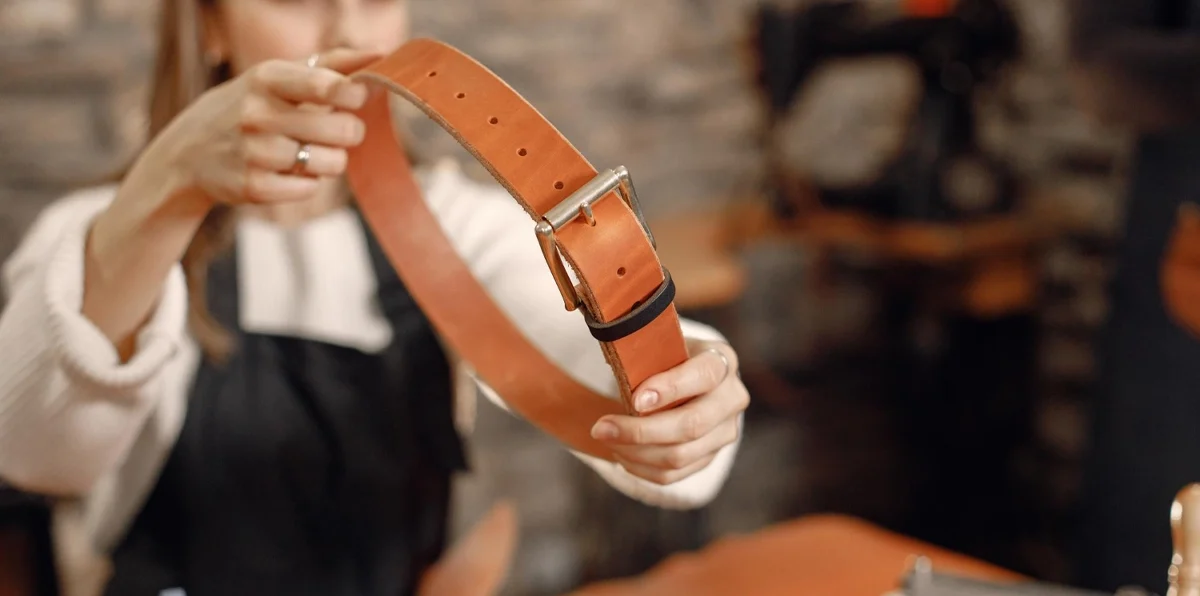
Choosing a handmade full grain leather belt is special. This belt lasts a long time. It looks even better as it gets older. Each belt has its own unique look. When you buy from American craftsmen, you help your local economy. You also help keep old traditions alive. You support eco-friendly ways and show pride in your community. Handmade belts 101 is not just about fashion. It is about making a smart choice. You also support people who care about their craft.
- Supporting local craftsmen keeps culture and traditions alive.
- Artisan-led businesses make jobs and help towns grow.
- Eco-friendly ways and renewable materials help the planet.
Key Takeaways
- Pick full grain leather if you want a strong belt. It will look better as it gets older. – Buy from local artisans to keep their skills alive. This also helps your community grow. – Check for special marks and good stitching on the belt. This shows it is really handmade. – Buy a handmade belt because it lasts longer than cheap ones. You will save money over time. – Take care of your belt by using conditioner often. Keep it dry so it stays nice.
Why Handmade Belts 101 Matters
Durability & Longevity
When you pick a full grain leather belt, you choose something that lasts. Most belts from big stores use cheap materials. These belts often crack or peel in less than a year. A handmade full grain leather belt can last ten years or even longer if you take care of it. Some people even pass them down to family members. Take a look at this table to see the difference:
| Leather Grade | Estimated Lifespan | Key Characteristic |
|---|---|---|
| Full-Grain Leather | 10+ Years (can last a lifetime) | Extremely durable, develops a patina |
| Genuine/Bonded Leather | 1-2 Years | Prone to cracking and peeling |
You get more than just a belt. You get a piece that grows better with age.
Unique Style & Character
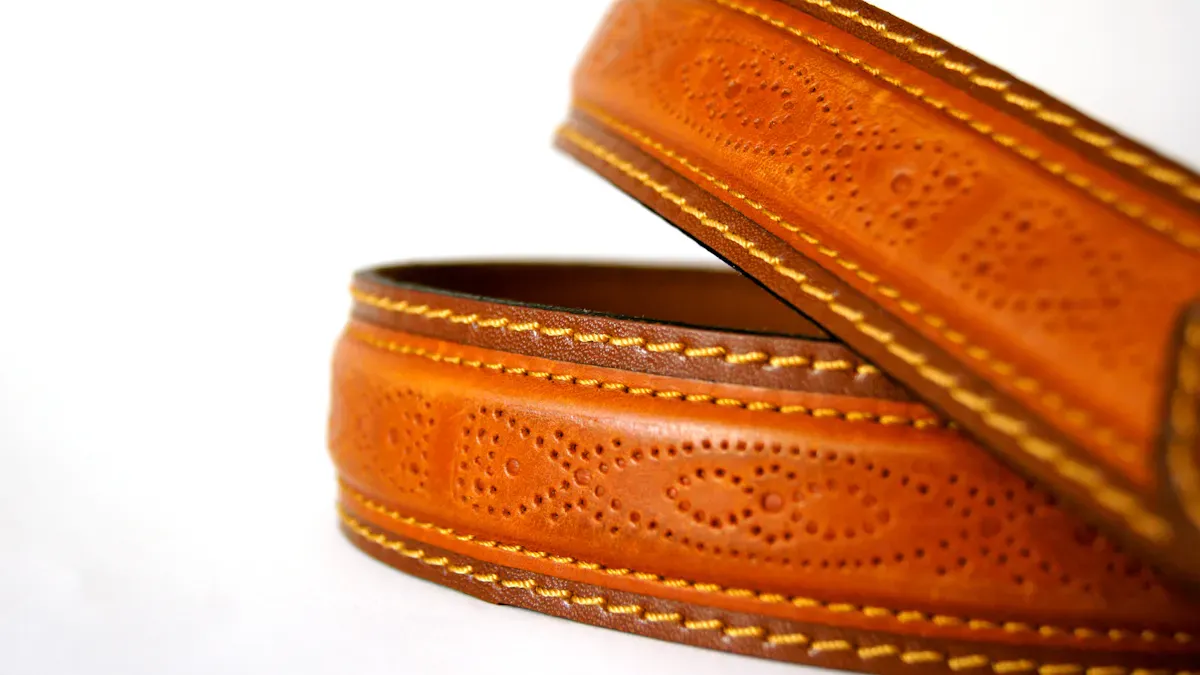
No two handmade belts look the same. Full grain leather keeps its natural marks. You might see tiny scars, wrinkles, or even insect bites. These marks show the belt is real and unique. Over time, your belt will develop a patina. This means the color and shine change as you wear it, making it even more special. You will also notice neat, straight stitching and smooth edges. Solid brass or stainless steel buckles add to the quality. When you wear a handmade belt, you show off your own style.
- Natural marks and patina make each belt one-of-a-kind.
- Strong stitching and smooth edges show true craftsmanship.
- Quality buckles last as long as the leather.
Value for Investment
You might pay more for a handmade belt at first, but you save money in the long run. Cheap belts break fast, so you buy new ones often. A full grain leather belt can last 10 to 20 years. That means you spend less over time. Here’s a quick comparison:
| Belt Type | Lifespan | Durability Description |
|---|---|---|
| Handmade Full Grain Leather | 10-20 years | High durability, stands up to daily use |
| Bonded Leather | Less than 12 months | Prone to cracking, peeling, and breaking |
Handmade belts 101 teaches you that quality matters. You get a belt that looks great, lasts for years, and saves you money.
Full Grain Leather Explained
What Makes It the Best
You want a belt that stands up to daily wear and still looks great. Full grain leather gives you that and more. This leather comes from the top layer of the hide, so it keeps all the natural strength. You get a belt that feels firm but soft in your hands. Over time, it gets even better. The surface develops a rich patina, which means the color and shine change as you use it. Each belt tells its own story. Full grain leather also uses fewer chemicals, making it a smart choice for the planet. If you want a belt that lasts for years and looks unique, full grain is the way to go.
Tip: Full grain vegetable-tanned leather is the top pick for belts. It’s thick, sturdy, and holds its shape.
Full Grain vs. Other Leathers
Not all leather belts are the same. Here’s a quick look at how full grain compares to other types:
| Type of Leather | Durability | Appearance |
|---|---|---|
| Full Grain Leather | Most durable, develops a rich patina | Unique natural imperfections, highly attractive |
| Top Grain Leather | Less durable, easier to scratch | Smooth, uniform appearance |
| Genuine Leather | Less durable, lower quality | Uniform texture, often altered to look better |
| Bonded Leather | Weakest, low-quality | Homogeneous look, lacks natural texture |
Full grain leather stands out for its strength and beauty. Top grain leather feels smooth but scratches easily. Genuine leather and bonded leather don’t last long and often look fake. If you want a belt that ages well and stays strong, full grain is your best bet.
How to Identify Full Grain
You can spot full grain leather with a few simple checks:
- Feel the surface. It should feel soft but firm, with a little bounce when you press it.
- Smell the belt. Real full grain leather has a rich, earthy scent. Fake leather smells like chemicals.
- Look for natural marks. You might see tiny scars or pores. These show the leather is real.
- Try a water drop test. Real leather absorbs water, while fake leather makes it bead up.
When you know what to look for, you can pick a belt that will last for years and look better every day.
Handmade Process
Material Selection
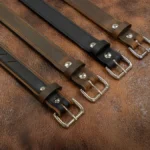
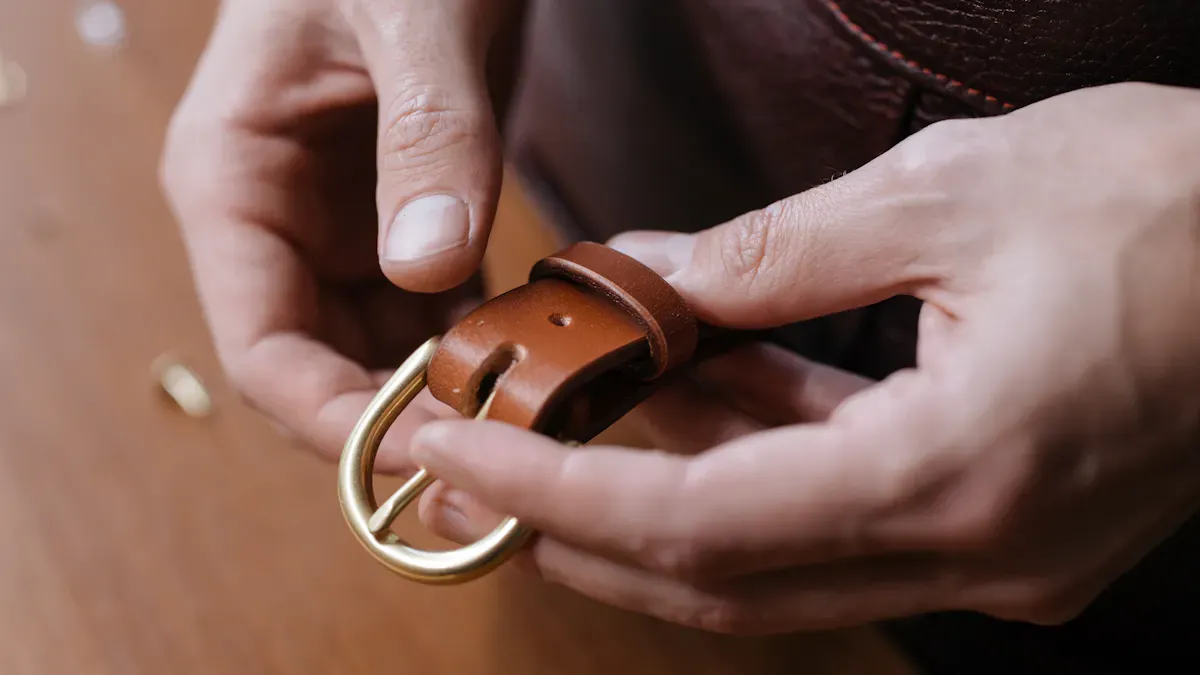
To make a belt that lasts, you need good materials. Artisans choose full grain leather because it is strong and has character. They pick thick leather straps made from one piece. This makes the belt tough and long-lasting. The hardware is solid brass or stainless steel. This helps the belt last longer. The buckle system is reinforced to keep the belt secure. Many craftsmen get their leather from special tanneries. These tanneries use vegetable tanning. This keeps the leather natural and strong.
- Full grain leather is strong and has character
- Thick, one-piece straps make belts last longer
- Solid brass or stainless steel hardware
- Reinforced buckle systems keep belts secure
- Leather from tanneries that use vegetable tanning
Cutting & Shaping
After picking the materials, artisans cut and shape the leather. They cut the leather into strips that fit the style and width you want. They use a knife, ruler, and cutting board for this step. Sometimes, they use a strap cutter or a straight edge and sharp knife. They measure the strip and mark it before cutting. Then, they cut along the line to make an even strip.
- Cut leather into strips for the right width and style
- Use a knife, ruler, and cutting board
- Strap cutter or straight edge helps with neat cuts
- Measure and mark before cutting
Stitching & Assembly
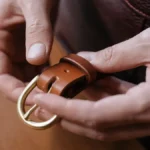
Stitching gives the belt its strength. Hand-stitching, like saddle stitching, makes strong seams. Heavy-duty stitching lets the belt bend without breaking. Lock-stitches help the belt handle lots of pulling. Stitching also helps the belt stretch and move without damage. With care, handmade belts can last 10-20 years or more.
- Heavy-duty stitching makes belts strong
- Lock-stitches help belts handle tension
- Stitching lets belts stretch and move
- Saddle stitching adds strength and neatness
Tip: Hand-stitching makes belts stronger than machine stitching.
Finishing Details
Finishing touches make the belt look and feel nice. Full grain leather soaks up oils, water, and sunlight. This makes the color deeper and darker. Over time, the leather gets softer and bends more easily. You will see a shiny look appear. Small marks and scuffs blend in and add character. To keep your belt looking good, use it often and add leather conditioner sometimes. Let it get air and sunlight. Wipe it gently and condition it now and then.
- Color gets deeper and darker with use
- Leather gets softer and bends more easily
- Shiny look appears over time
- Marks and scuffs make each belt special
- Use often and condition sometimes
American vs. Imported Leather
Sourcing & Quality
You may ask why American leather is different. American belt makers pick hides from top tanneries. Some famous ones are Wickett & Craig, Horween Leather Company, and Seidel Tannery. These places use old methods and care about quality. Belts are made from full grain leather. This leather ages well and lasts a long time. Skilled workers make each belt by hand. They pay close attention to every detail. You get strong stitching and good materials. The belt feels special and sturdy.
| Key Advantages of American-Sourced Leather | Description |
|---|---|
| Exceptional Construction | Handcrafting makes stitching stronger and belts last longer. |
| Premium Raw Materials | High-quality hides come from well-known American tanneries. |
| Fair Labor Practices | Strict laws make sure workers are treated fairly. |
| Environmental Responsibility | Vegetable tanning and water recycling help the planet. |
| Simplified Supply Chain | Fewer problems from shipping overseas. |
| Faster Turnaround | New styles come out quicker. |
| Support for the Local Economy | Making belts in the USA creates jobs and helps workers. |
You get great craftsmanship and unique belts. You also help your local economy.
Tanning Methods
How leather is tanned changes its quality and how it affects nature. American tanneries often use vegetable tanning. This uses plant extracts instead of chemicals. Vegetable-tanned leather gets a warm patina as it ages. It starts out stiff but gets softer with use. Chrome tanning is common in imported leather. It uses chemicals like chromium salts. This makes leather soft right away and more water-resistant. But it can hurt the environment.
| Attribute | Vegetable-Tanned Leather | Chrome-Tanned Leather |
|---|---|---|
| Tanning Process | Uses plant tannins | Uses chromium salts |
| Environmental Impact | Good for the planet | Can cause pollution |
| Color | Changes over time | Stays the same |
| Flexibility | Gets softer with wear | Soft from the start |
| Water Resistance | Not very water-resistant | More water-resistant |
Tip: Vegetable-tanned belts last longer and look nicer as they age.
Ethical & Environmental Factors
You want your belt to be good for people and the planet. American brands get hides from the food industry. Animals are not raised just for their skins. These brands follow fair labor rules. Workers get safe places to work and fair pay. Vegetable tanning uses natural extracts. This lowers pollution and keeps nature safe. When you pick a full grain, vegetable-tanned belt, you help cut waste and keep the planet clean.
- Ethical sourcing cuts waste and keeps animals safe.
- Fair labor rules protect workers.
- Vegetable tanning lowers pollution and carbon footprint.
- Regular tanning can pollute water and hurt nature.
You help the planet and people when you pick American-made, ethical belts.
Evaluating Belt Quality
When you shop for a leather belt, you want to know you’re getting the real deal. Not all belts are made the same. Some look nice at first but fall apart fast. Others last for years and get better with age. Let’s break down how you can spot a high-quality handmade belt and avoid the common traps.
Signs of Craftsmanship
A true handmade belt stands out from the crowd. You can spot expert work if you know what to look for. Here are some signs you should check:
- Durability: A full grain leather belt can handle stress and daily wear without cracking or tearing.
- Unique Patina: Over time, the leather changes color and shines more. This patina makes your belt look even better as it ages.
- Superior Construction: Look for careful leather selection, neat stitching, and smooth, burnished edges. These details show the maker took pride in their work.
Tip: Run your fingers along the belt’s edge. If it feels smooth and rounded, that’s a good sign. Sharp or rough edges often mean poor craftsmanship.
You can also check the buckle holes. On a handmade belt, the holes look clean and even. The leather fibers around the holes stay tight and don’t fray. Mass-produced belts often have messy, stretched, or fuzzy holes. If you see layers peeling apart, that’s a red flag.
Buckle & Hardware
The buckle and hardware matter just as much as the leather. Cheap buckles break or rust. Quality hardware keeps your belt strong for years. Here’s what you should look for:
- Solid Brass or Stainless Steel: These metals last a long time and don’t rust. They also look better as they age.
- Rugged Fastening: A sturdy buckle stays in place, even if you move a lot or use your belt outdoors.
- Reliable Construction: Good hardware feels heavy and solid in your hand. Thin, lightweight buckles often bend or snap.
Note: A well-made buckle adds to the belt’s reliability. If you plan to wear your belt every day, don’t settle for weak hardware.
Spotting Genuine Handmade Belts
It’s easy to get fooled by labels like “genuine leather” or “bonded leather.” These terms sound good but often mean lower quality. Here’s how you can tell if a belt is truly handmade and full grain:
| Feature | Single Layer Leather Belts | Double Layer Leather Belts |
|---|---|---|
| Construction | Made from one solid piece of full-grain leather | Made by combining two layers of material |
| Durability | Stronger, more durable, fewer failure points | Weaker over time where layers are bonded |
| Maintenance | Develops a natural patina, easier to maintain | Can peel, delaminate, and crack |
- Full-grain leather is the best choice. It’s tough, lasts for years, and gets better with age.
- Bonded leather uses scraps glued together. It cracks and peels quickly.
- Genuine leather sounds fancy, but it’s a lower grade. It often feels stiff or plastic-like and doesn’t last.
Warning: Belts labeled as “genuine leather” or “bonded leather” may look good at first, but they break down fast. You’ll end up replacing them much sooner than a full grain belt.
When you touch a full grain belt, it feels warm and earthy. The surface shows tiny marks or scars, proving it’s real. If you see a belt with a slick, plastic feel or a perfect, fake-looking surface, it’s probably not full grain.
Handmade belts 101 teaches you to look for these signs. If you want a belt that lasts, always choose full grain leather. Avoid belts with glued layers or “genuine leather” tags. Your belt should feel solid, look unique, and stand up to years of use.
Choosing the Right Belt
Sizing & Fit
Getting the right fit makes your belt comfortable and helps it last longer. You don’t want a belt that’s too tight or too loose. Here’s how you can find your perfect size:
- Measure your current belt from the end of the buckle to the hole you use most.
- Use a flexible tape measure around your waist, snug but not tight.
- Write down your measurement in inches or centimeters.
- Check the sizing chart from the belt maker to match your measurement.
- If the company asks for your waist size, add two inches for the best fit.
If your waist size is an odd number, round up to the next even number. Men’s pant size plus two inches usually gives you your belt size. If you can’t find your size, many makers offer custom sizing. Just measure carefully and give your exact number.
Tip: A belt that fits well feels comfortable and looks sharp. Don’t settle for “almost right.”
Style & Color
Your belt should match your style and the occasion. Black leather belts work best for formal events and business outfits. Brown leather belts add a relaxed touch and pair well with jeans or chinos. Custom belts let you show your personality and fit many looks.
- Match your belt color with your shoes for a polished look.
- Black belts go with neutral outfits and dress clothes.
- Brown belts bring warmth to casual wear.
- Reversible belts give you options for both black and brown styles.
Choosing the right style makes your outfit look complete.
Care & Maintenance
Taking care of your belt keeps it looking good and helps it last for years. Clean your belt with a soft, damp cloth after wearing it. Avoid harsh cleaners. Condition your belt every few months to keep the leather soft and prevent cracks. Rotate between belts so each one gets a break. Store your belts flat or hang them on a rack. Keep them away from moisture. If your belt gets wet, blot it gently and let it air dry.
Note: If you buy from American artisans and local tanneries, you get better materials, custom sizing, and craftsmanship that lasts.
Handmade belts 101 reminds you to choose full grain leather, the right thickness, and a style that fits your life. Supporting local makers means you get a belt that’s built to last and looks great every day.
Now you know why handmade full grain leather belts are special. They last a long time and look nicer as they get older. These belts also help skilled American workers. If you learn about materials and how belts are made, you can skip cheap belts that break quickly. Use these tips from handmade belts 101 to find a belt that matches your style and what you care about.
- Pick full grain leather if you want a strong belt with cool aging marks.
- Check for neat stitching and strong buckles.
- Buy from local makers who use earth-friendly ways.
Don’t forget, a good belt is more than just something you wear. It is a smart buy that lets you show who you are.
FAQ
How do I know if my belt is real full grain leather?
Check for natural marks and a rich, earthy smell. Real full grain leather feels firm but soft. If you see a perfect, plastic-like surface, it’s probably fake.
Can I get my belt wet?
You can, but try to keep it dry. If your belt gets wet, blot it with a towel and let it air dry. Don’t use heat.
How often should I condition my belt?
You should condition your belt every three to six months. Use a leather conditioner or natural oil. This keeps the leather soft and helps prevent cracks.
What’s the difference between handmade and factory-made belts?
| Feature | Handmade Belt | Factory-Made Belt |
|---|---|---|
| Craftsmanship | Unique, detailed | Mass-produced |
| Materials | Full grain leather | Mixed or bonded leather |
| Durability | Lasts for years | Wears out quickly |
Do handmade belts stretch over time?
Yes, your belt may stretch a little as you wear it. This is normal for full grain leather. The belt will shape to your body and become more comfortable.