People wanted to use every part of the animals they hunted. They discovered that animal hides could keep them warm and protect them from harsh weather. Early humans learned to preserve these hides by smoking them, drying them in the sun, or rubbing them with animal fats. This made the hides last longer and stay soft. Archaeologists found evidence that leather was invented about 400,000 years ago. The table below shows when and where leather invented and was first used:
| Date | Evidence Description | Location |
|---|---|---|
| 400,000 years | Early humans used animal hides for protection, showing lots of leather invented and use. | Hoxne, England |
| 15,000 years | People started using leather invented in the late Paleolithic period with animal skins. | N/A |
| 7000 BC | Murals show leather invented clothes and decorations. | Chatarhuyuk, Turkey |
| 3300 BC | The Etzi Iceman was found, showing leather invented use. | N/A |
Key Takeaways
- People have used leather for more than 400,000 years. It helped early humans stay warm and safe. – Long ago, people kept hides by smoking, drying, and using animal fats. These ways made leather better. – Leather was very important in old societies. People used it for clothes, armor, and tools. This shows how much people needed leather every day. – The Industrial Revolution changed how leather was made. It became faster and cheaper to make. More people could buy leather things. – Today, new ideas help make eco-friendly leather choices. These help the environment and keep leather good.
How Was Leather Invented?
Early Necessity and Resourcefulness
Long ago, people lived in tough weather. They needed ways to stay safe and warm. After hunting, they saw animal hides as useful. People used these hides for clothes, homes, and tools. Hides helped keep them dry and warm. Over time, people learned to use every part of the animal. This made life easier and helped them survive.
- People wore hides to stay warm and dry in bad weather.
- They made shelters like tipis and wigwams with hides and wood.
- Families used hides for blankets, bags, and to hold things.
- When people started raising animals, they got more hides.
- Ancient Sumerians made early leather-tanning tools about 5000 BCE.
- The Areni-1 shoe from Armenia shows early leather work.
- Ancient Egyptians wrote about using leather around 1300 BCE.
These examples show how people needed leather and found ways to make it. They changed their methods as their lives changed.
First Preservation Methods
Before tanning, people used simple ways to keep hides from going bad. They took off the flesh and hair from the skins. Then, they used things from nature to treat the hides. Salt, animal fat, or brains helped keep hides soft and stopped them from rotting. Drying hides over fire made them tougher and last longer.
- Salt pulled out water and slowed bacteria.
- Animal fat or brains made hides soft and bendy.
- Sun drying and smoking helped hides last longer.
These first ways of saving hides started the leather invented process. People learned by trying new things and got better over time.
Earliest Evidence and Artifacts
Archaeologists found many old things that show leather was important. One example is a 2,700-year-old Assyrian-style leather armor in China. The armor had many small and big scales. This shows ancient people were skilled at making leather. The design let soldiers put it on fast and fit many body shapes. Finding the armor in a tomb means leather was special and useful in Assyrian life.
Old books also talk about leather. Homer’s Iliad tells of warriors with leather shields and straps. These stories show that leather invented skills spread to many places and were important for daily life and war.
Ancient Leather Making Techniques
Early Tanning Processes
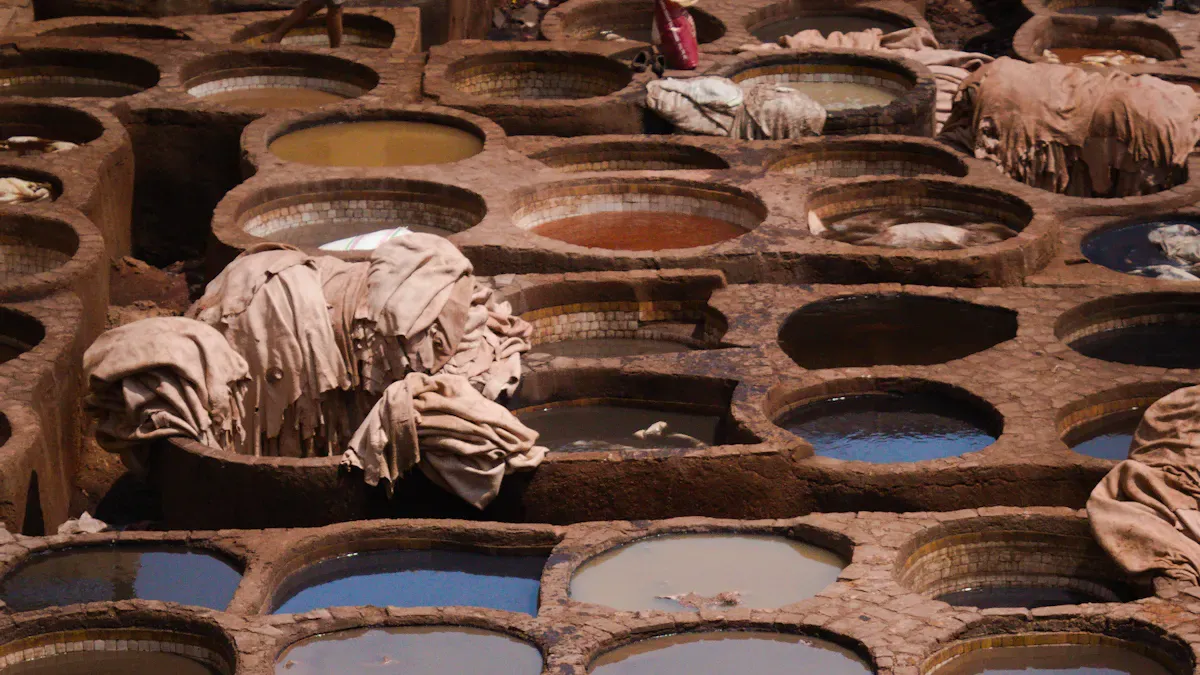
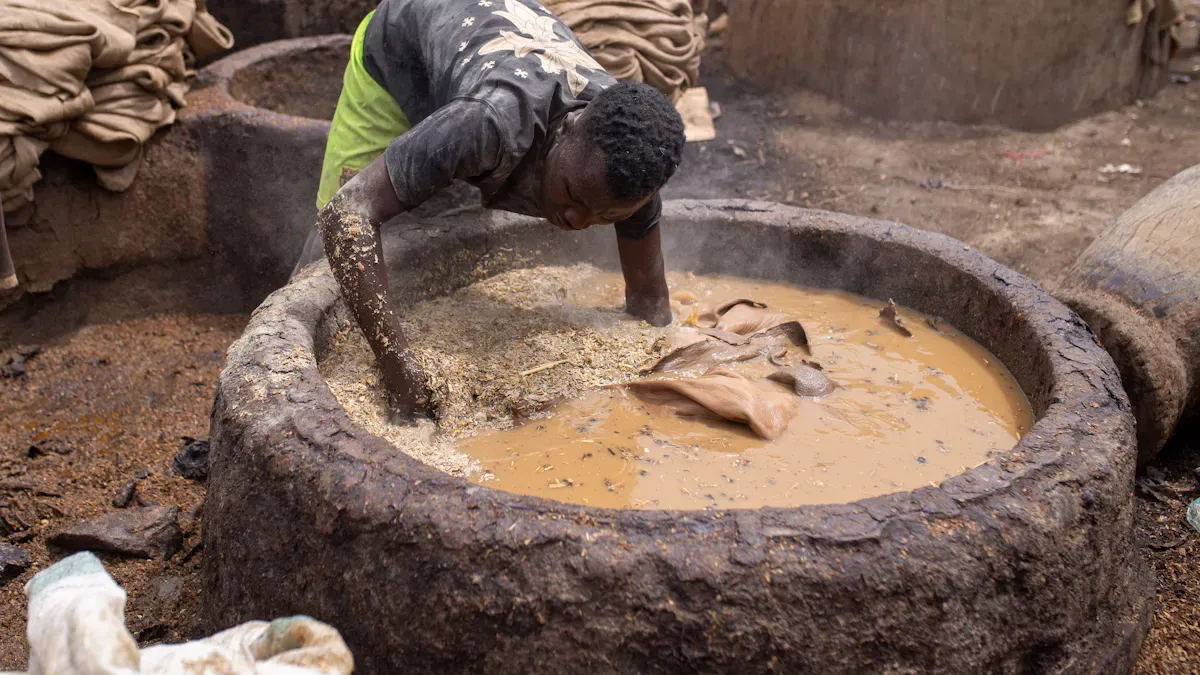
Long ago, people wanted leather to last longer. They tried new ways to tan hides. In the Paleolithic period, they made simple shoes from soft animal skins. When people lived in villages, they found ways to stop leather from rotting. They used things like tree bark, leaves, and animal brains. Ancient Sumerians built early tanneries thousands of years ago. These places let people treat many hides at once. Over time, people in different places made their own tanning methods.
- Early people used animal fats and brains to soften hides.
- They dried hides in the sun or smoked them over fire.
- Ancient Egyptians used plants to make leather bendy.
- New tanning ways made leather stronger and more useful.
Leather in Ancient Societies
People in Mesopotamia, Egypt, and China used leather for many things. Mesopotamians made sandals and gear for soldiers. Egyptians made clothes, sandals, and items for ceremonies. In China, people made armor and decorated leather for art. Tutankhamun’s tomb in Egypt had beautiful leather items. This showed leather was important in their culture.
| Civilization | Applications of Leather |
|---|---|
| Egypt | Sandals, Military gear, Chariot harnesses, Scrolls and writing materials |
| Rome | Belts and bags, Scrolls and bookbinding, Furniture and household articles |
| China | Lacquered leather armor, Inscriptions and instruments |
Other groups like the Indus Valley people and Celts used leather too. They made clothes, armor, and tools from leather. Leather helped people live, work, and stay safe.
Evolution of Tools and Methods
People made better tools and tried new ways to work leather. They used bone awls and sewing needles to stitch shoes, bags, and armor. Egyptians and Romans made leather more bendy and strong with plant tanning. Early workers learned to treat hides with fats and brains to make them last longer.
- Bone awls and needles helped make detailed leather items.
- Plant tanning gave leather more uses, like armor and shoes.
- New ways made leather softer and easier to shape.
Note: These changes helped people make many things from leather, like armor and art.
Leather Through History
Middle Ages and Craftsmanship
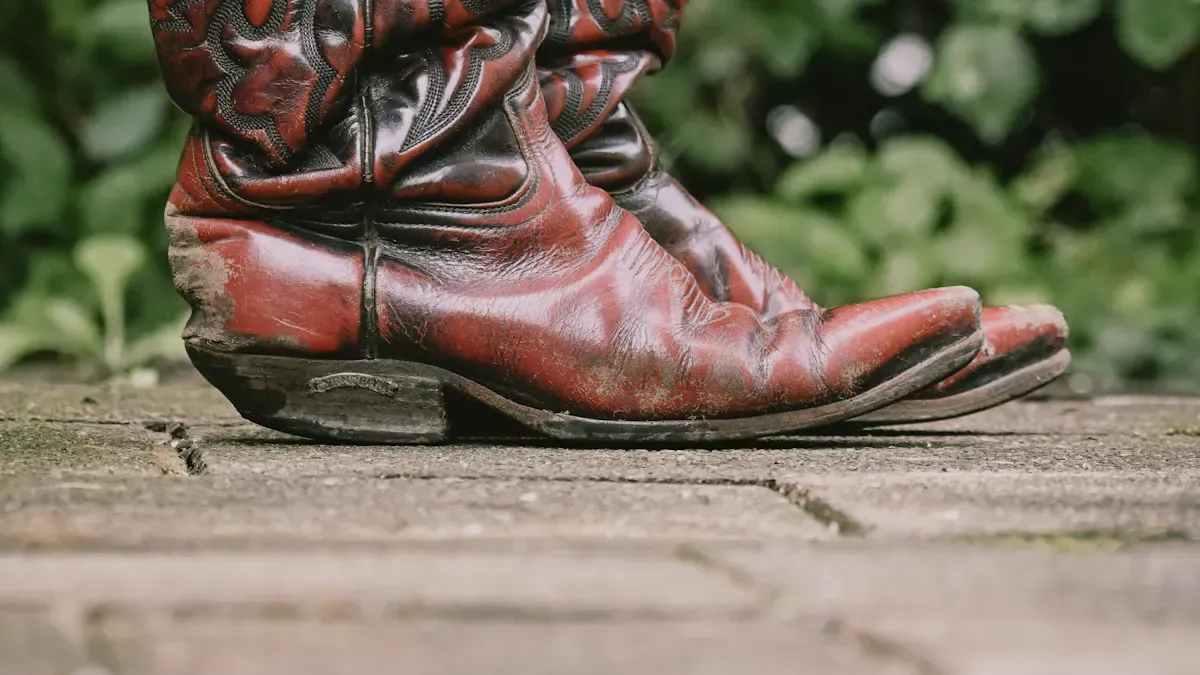
In the Middle Ages, leather was useful and showed status. Craftsmen got better at making leather goods. They learned new ways to work with leather. They used tooling, carving, dyeing, and painting. Special tools, like boar bristle needles, helped them make nicer things. Trade guilds started in cities. This showed leatherworking was important and hard to do.
- Leather showed who was rich or noble. Nobles wore fancy shoes, like Crakow shoes with long toes.
- Guilds for tanners, shoemakers, and saddlers made rules and checked quality.
- People used leather for armor, shoes, belts, bags, and horse gear.
- Some books were covered in leather, with gold and pretty designs.
Leather guilds had a lot of power in cities. They made rules and protected their jobs. Leather was a big part of what cities sold. It even helped pay for wars and big churches.
| Region | Guild Rules |
|---|---|
| Florence, Italy | Tannery spots limited, quality checked |
| Paris, France | Tanneries kept away from homes, taxed |
Industrial Revolution Changes
The Industrial Revolution changed how people made leather. Factories took over from small shops. Machines like peelers and cutters made work faster. New chemicals, like chrome tanning, changed how hides were tanned. Steam power and machines let people make lots of leather at once.
The drum, a big spinning machine, made tanning faster. It cut the time from weeks to about one week.
James Saint made a sewing machine in 1790. It made leatherwork faster. Jan Ernst Matzeliger made a machine that made shoes cheaper. More people could buy shoes.
Making leather in big amounts made it cheaper and easier to get. Good shoes and bags were now for more people.
Key Milestones
- Prehistoric times: Early people used animal hides for clothes and homes. The oldest leather items are from 1300 BC.
- Ancient civilizations: Greeks, Egyptians, and Romans used leather for sandals, armor, and more.
- Middle Ages: Tanners made guilds. This helped spread new leather methods.
- 19th century: Chrome tanning made leather faster and easier to make.
- Victorian era: Leather was used for fancy books and luxury things.
- Today: Fashion designers use old and new materials. Leather is still important in style.
Leather’s Impact on Society
Everyday Uses and Utility
People in old times needed leather for many things. They made shoes, belts, capes, and shields. This was during the Bronze Age. Later, bigger groups wanted more leather items. These included bright clothes and jewelry in the Iron Age. In ancient India, leather was used for bags and straps. Old writings from India talk about these uses. Egyptians made sandals, harnesses, and wrote on leather. During the Renaissance, people wore leather clothes and used it for gear. When machines came, leather goods were made faster. More people could use leather every day.
- Leather shoes kept feet safe from sharp rocks.
- Capes and belts helped people stay warm and safe.
- Bags and straps made it easy to carry things.
- Sandals and harnesses helped people travel better.
- Book covers and scrolls kept important writing safe.
Here is a table that shows how leather was used at home and in the army:
| Context | Use of Leather |
|---|---|
| Military | Cheap, light armor (cuir bouilli), scabbards, reinforced gear, effigies |
| Domestic | Bookbinding, tough boots, containers like blackjacks and bombards |
Economic and Trade Influence
Leather was important for money and jobs long ago. The Roman Empire needed leather for soldiers and daily life. Making and selling leather gave people work. Tanneries and shops helped cities get bigger. People traded leather goods far and wide. This helped different places share ideas and skills. The leather business paid for wars and big buildings. This shows how strong the leather trade was.
Leather trade routes joined faraway places and shared new skills.
Cultural Significance
Leather means a lot in many cultures. In the West, leather stands for strength and freedom. Bikers and rockstars wear leather to show this. In Japan, fancy leatherwork shows someone’s status. In India, leather is used for shoes and special decorations. In Africa, leather is part of rituals and shows wealth.
- The Tuareg people in Mali are proud of their leather.
- Each Tuareg leather item links their past and future.
This table shows how leather is used in special events and rituals:
| Culture/Tradition | Example of Leather Use | Significance |
|---|---|---|
| Judaism | Leather scrolls for the Torah | Honor to keep Torah scrolls nearby |
| Christianity | Papal sandals worn by the Pope | Symbol of dignity and leadership |
| Islam | Leather shoes (khuff) worn during prayers | Important for religious dress and pilgrimage |
| Buddhism | Leather-bound prayer books | Sacred and preserved with care |
| Native American | Leather medicine bags | Bond to spiritual realms and nature |
| Hinduism | Leather-bound prayer books and drums | Spiritual meaning in rituals |
| Southeast Asia | Buddhist garments made of leather | Used by monks, showing cultural and spiritual practice |
Leather still helps shape who people are and what they do today.
Modern Leather and Legacy
Advances in Processing
Today, factories use new technology to make leather better. They treat leather so it can resist water and mold. These treatments also make leather softer. Chrome-free tanning uses safer metals like aluminum and titanium. Many companies use enzyme tanning, which is more natural and causes less pollution. Some producers use vegetable tannins for fancy leather. Synthetic tannins help make leather without old chemicals.
| Innovation Type | Description |
|---|---|
| Water-repellent processing | Special steps make leather resist water. |
| Mold-resistant processing | Treatment stops mold from growing on leather. |
| Softening treatment | Process makes leather feel softer. |
| Chrome-free tanning | Uses safe metal salts like aluminum and titanium. |
| Reevaluation of vegetable tannins | Old methods are used for fancy leather. |
| Enzyme tanning | Uses biology to tan leather with less harm. |
| Synthetic Tannin | New tannins are made with chemicals for leather. |
Environmental and Ethical Issues
Old ways of making leather hurt the environment. Factories use lots of water and chemicals. Raising cows causes forests to be cut down, especially in the Amazon. Tanning often pollutes water and soil. Bad waste handling lets toxic stuff into nature. Making leather also creates greenhouse gases, which cause climate change.
- Leather making cuts down forests in Brazil.
- One cow hide needs over 100,000 liters of water.
- Tanning uses dangerous chemicals like chromium.
- Factories pollute water and soil.
- Leather making increases greenhouse gases.
People worry more about animal welfare now. Some ask if leather should only be a meat byproduct. Certifications focus on the environment but sometimes forget animal care. New materials like mycelium leather, Piñatex, and lab-grown leather are better for the planet. These new options must be checked to make sure they are really good for nature.
Lasting Influence
Leather still affects fashion, design, and technology. Smartwatches and fitness trackers use leather straps for comfort and style. Brands like VEERAH use apple peels and other plant leftovers to make cruelty-free materials. Designers use vegetable-tanned and recycled leather to help the environment. Smart bags have USB chargers and Bluetooth trackers. CNC and laser cutting make cool patterns and help production.
- Montblanc and Fitbit use leather for smart accessories.
- VEERAH makes shoes from apple peels.
- Smart bags have USB chargers and tracking devices.
- CNC and laser cutting make designs better.
Leather’s legacy goes on as people mix old ways, new tech, and care for the planet.
Leather helped people live by giving them clothes and tools. It also kept them safe from danger and bad weather. The table below shows how people used leather in different times:
| Time Period | Use of Leather | Significance |
|---|---|---|
| 1046-256 BCE | Research on leather technology | Early focus on leather’s usefulness |
| 1450 BC | Oldest leatherware in Egypt | Used for clothing |
| Industrial Revolution | High demand for leather | Mass production for many industries |
| Ancient Cultures | Armor, footwear, and tools | Key for survival in many climates |
People started making leather in the Stone Age. They made better tools like bone awls and sewing needles. Today, designers use old tanning ways to help the planet. They also care about where leather comes from. People still try to reuse things and protect nature. Leather is an old invention that changed the world for a long time.
FAQ
What is leather made from?
Leather is made from animal hides. Most leather comes from cows, goats, or sheep. People clean the hides and treat them. This makes the hides strong and bendy. Some new leathers use plants or are made in labs.
How did ancient people tan leather?
Long ago, people used things from nature to tan hides. They used tree bark, animal brains, and smoke. They rubbed these on the hides or soaked them. This stopped the hides from rotting. It helped leather last a long time.
Why did leather become so important in history?
Leather helped people live better lives. It kept them safe from weather and harm. Soldiers wore leather armor for protection. Farmers used leather for tools and harnesses. Leather also showed wealth and skill.
Are there eco-friendly alternatives to traditional leather?
Yes! Some companies make leather from mushrooms and pineapple leaves. Others use old materials to make new leather. These choices use less water and fewer chemicals. Many people pick them to help the earth.